
Biomedical and Electrical Engineer with interests in information theory, evolution, genetics, abstract mathematics, microbiology, big history, IndieWeb, mnemonics, and the entertainment industry including: finance, distribution, representation

boffosocko.com

chrisaldrich

chrisaldrich

+13107510548

chris@boffosocko.com

stream.boffosocko.com

www.boffosockobooks.com

chrisaldrich

mastodon.social/@chrisaldrich

micro.blog/chrisaldrich


@granderojo I always liked Munkres' Topology but you can't beat Dover's value.


<i>Manny wrote: "I see Jacobson was an expert on Lie algebras... yes, that might certainly be useful! Thanks..."</i>

Many/most graduate math texts on Lie Groups/Algebras utilize manifold theory as their basis, which can make the field more daunting for physicists. As a result, I recommend looking at books that take a more linear algebraic bent to the subject, which can make some of the quantum mechanics related areas more transparent. I've used [book:Lie Groups, Lie Algebras, and Representations: An Elementary Introduction|1051566], [book:Matrix Groups for Undergraduates.|1162374], and [book:Lie Groups, Lie Algebras, and Some of Their Applications|424103] for these types of applications and viewpoints.

About a year ago, I took a two quarter sequence at UCLA on Lie Groups from an ("easier") matrix group perspective which I imagine you may find somewhat useful in your reading on quantum mechanics. Several engineers, programmers, amateur mathematicians, physicists, and quantum mechanics enthusiasts had spent several years coaxing the professor into teaching it from this perspective. It was geared toward the advanced undergraduate level, and based on your comments here and your reading of Shankar, should be relatively easily followable.

We loosely followed Hall's textbook and portions of [book:Matrix Analysis|647523], which will give you some of the advanced linear algebra you could possibly be missing depending on your background. If it helps, here's a link to a downloadable pdf copy of the notes for the first class with the audio of the lecture embedded (using Livescribe.com digital pen technology which should let you click on the notes and jump to the audio portion related to where you've clicked): http://bit.ly/1KMxj0R. If it's useful, let me know and I can give you links for others. You may need to open it up in a more recent version of Acrobat Reader to be able to access the audio portion of the lecture, which will go a long way to assisting the clarity of the notes.)

Having this background may make Weyl and Woit's developing textbook more easily manageable. My guess is that Woit is doing a more thorough job of developing the math than typical physics-oriented texts like [book:Geometry, Topology and Physics|439357] which do a lot of hand-waving at the math in an effort to get to the physics more quickly, but at the detriment of understanding what is happening mathematically.

I've dipped into some of Weyl's work in the past, but also keep in mind that some of his notation and definitions can be dated in relation to more modern presentations.


My answer to Question on @Quora: Would it be worth it to study category theory? http://qr.ae/R7u9ME

The sad answer for most in your situation is: probably not yet. There just isn't a broad layer of applied use of category theory in your area yet. (I'll note that I'm also an electrical engineer with a background in information theory.) HOWEVER, this certainly doesn't mean it's not important and that the future won't find lots of applications for it, particularly given its abstraction and ability to connect disparate areas of mathematics. On the bleeding edge of research, however, it's another story. (For a flavor of some of this, take a look at John Baez's blog Azimuth: https://johncarlosbaez.wordpress.com/?s=category+theory). Given my diverse mathematical background, I have no doubt that category theory will be exceedingly important over the next century, and particularly in the area of communications.

My suggestion to you, particularly as you mention that it seems very abstract, is that you do some preliminary background work in abstract algebra, combinatorics, and even set theory, which will likely be much more immediately applicable to your present area of study. These will give you a far better preparation for attacking category theory in the future. (I can't recall having seen or heard any EE departments even suggesting category theory courses recently, much less requiring them, even at the master's level. Further, very few universities are offering coursework directly in the topic at the moment, so it's far more likely that you'll only see it at the graduate level.

Those looking to dip their feet in the water might consider taking a look at How to Bake Pi: An Edible Exploration of the Mathematics of Mathematics by Eugenia Cheng [http://www.amazon.com/gp/product/0465051715/ref=as_li_tl?ie=UTF8&camp=1789&creative=390957&creativeASIN=0465051715&linkCode=as2&tag=boffosocko-20&linkId=3QHVSGPXXWMTWGE2] which just came out in May in the US. It's a popular science text which gives some good overview of the subject and is the only book in that space at the moment to my knowledge.

I'll recommend that, if you're impatient, you take a peek at David Spivak's book Category Theory for the Sciences [http://www.amazon.com/gp/product/0262028131/ref=as_li_tl?ie=UTF8&camp=1789&creative=390957&creativeASIN=0262028131&linkCode=as2&tag=boffosocko-20&linkId=BW3G2IMA3JGCU2FC] which is currently one of the best introductory books on the market for those without more advanced background in mathematics. It was released last year by MIT Press and most of it can be found for free on the web - see the study site mentioned below for details. While it doesn't jump right in with heavy theorems/proofs the way most other popular texts in the area do, it does require a reasonable amount of mathematical sophistication, and it does provide a wealth of introductory material in chapters 1-4 on functions, sets, homomorphisms, isomorphisms, basic group theory, for those who don't have any background in set theory, basic topology, or abstract algebra.

As you're roughly in the same area I am, I'll mention that my interest in the topic was recently piqued by an article by Ilyas Khan: Category Theory – the bedrock of mathematics? [http://boffosocko.com/2015/04/30/category-theory-the-bedrock-of-mathematics-via-ilyas-khan/] It prompted me to drop my prior summer plans and create a category theory study group with a group of friends and many strangers. [see: Category Theory Study Group [http://cat.boffosocko.com/], which has a HUGE list of resources (including videos) in the area and is meant for students and self-study; feel free to join us if you'd like.]

As someone currently studying the topic, I will note that it isn't very difficult so far, and is relatively much easier than topics like advanced algebraic topology or Lie groups, so it could certainly be done at an advanced undergraduate level, but I'd certainly recommend diving into Spivak's book before any/many of the others which require a much higher level of mathematical sophistication typically required at the master's level or above. I would suggest that if you've done coursework in calculus and linear algebra and know most of the material in a book like A Primer of Abstract Mathematics (Classroom Resource Materials) by Robert B. Ash [http://www.amazon.com/gp/product/0883857081/ref=as_li_tl?ie=UTF8&camp=1789&creative=390957&creativeASIN=0883857081&linkCode=as2&tag=math01-20&linkId=J4TBWXWBEVTPHDU7http://www.amazon.com/gp/product/0883857081/ref=as_li_tl?ie=UTF8&camp=1789&creative=390957&creativeASIN=0883857081&linkCode=as2&tag=math01-20&linkId=J4TBWXWBEVTPHDU7], you should be able to tackle Spivak's book without too much difficulty. Having one or more of the other prerequisites I mentioned before would certainly help you move through the material much faster.


Physics, Topology, Logic and Computation: A Rosetta Stone #categorytheory

arXiv:0903.0340 [quant-ph]
In physics, Feynman diagrams are used to reason about quantum processes. In the 1980s, it became clear that underlying these diagrams is a powerful analogy between quantum physics and topology: namely, a linear operator behaves very much like a "cobordism". Similar diagrams can be used to reason about logic, where they represent proofs, and computation, where they represent programs. With the rise of interest in quantum cryptography and quantum computation, it became clear that there is extensive network of analogies between physics, topology, logic and computation. In this expository paper, we make some of these analogies precise using the concept of "closed symmetric monoidal category". We assume no prior knowledge of category theory, proof theory or computer science.
, ,


The Homological Nature of Entropy

We propose that entropy is a universal co-homological class in a theory associated to a family of observable quantities and a family of probability distributions. Three cases are presented: (1) classical probabilities and random variables; (2) quantum probabilities and observable operators; (3) dynamic probabilities and observation trees. This gives rise to a new kind of topology for information processes, that accounts for the main information functions: entropy, mutual-informations at all orders, and Kullback–Leibler divergence and generalizes them in several ways. The article is divided into two parts, that can be read independently. In the first part, the introduction, we provide an overview of the results, some open questions, future results and lines of research, and discuss briefly the application to complex data. In the second part we give the complete definitions and proofs of the theorems A, C and E in the introduction, which show why entropy is the first homological invariant of a structure of information in four contexts: static classical or quantum probability, dynamics of classical or quantum strategies of observation of a finite system.

Shannon information; theory; ; ; homotopy of links; mutual informations; Kullback–Leiber divergence; trees; monads; partitions;


Mathematics and Category Theory for Big History?! @davidgchristian @bighistory @BigHistoryInst

5 min read

The more I read of the introductory chapter of Category Theory for the Sciences by David Spivak, the more I'm sure there is a firm and solid foundation for potentially making mathematics a major pillar of Big History.  

The structural scheme for category theory within mathematics sounds almost like that of the structure of Big History as a whole. If nothing else it screams convergence while making very complex structures much simpler. (Big History in reverse perhaps?)
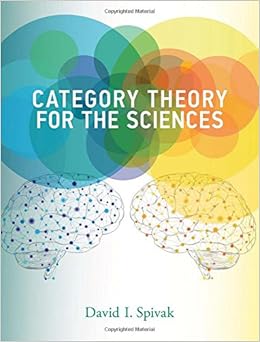
Cover of Complexity Theory for Scientists

I can't wait to delve further in. Spivak's text, though very mathematical in nature seems to have all the basic set theory (at a high school level), and the introduction indicates that he expects readers to have some facility with linear algebra, but there are no other highly daunting prerequisites.

A few excerpts:

This book extols the virtues of a new branch of mathematics, category theory, which was invented for powerful communication of ideas between different fields and subfields within mathematics. By powerful communication of ideas I mean something precise. Different branches of mathematics can be formalized into categories. These categories can then be connected by functors. And the sense in which these functors provide powerful communication of ideas is that facts and theorems proven in one category can be transferred through a connecting functor to yield proofs of analogous theorems in another category. A functor is like a conductor of mathematical truth.

We build scientific understanding by developing models, and category theory is the study of basic conceptual building blocks and how they cleanly fit together to make such models. Certain structures and conceptual frameworks show up again and again in our understanding of reality. No one would dispute that vector spaces are ubiquitous throughout the sciences. But so are hierarchies, symmetries, actions of agents on objects, data models, global behavior emerging as the aggregate of local behavior, self-similarity, and the effect of methodological context.

Hierarchies are partial orders, symmetries are group elements, data models are categories, agent actions are monoid actions, local-to-global principles are sheaves, self-similarity is modeled by operads, context can be modeled by monads.

The paradigm shift brought on by Einstein’s theory of relativity led to a widespread realization that there is no single perspective from which to view the world. There is no background framework that we need to find; there are infinitely many different frameworks and perspectives, and the real power lies in being able to translate between them. It is in this historical context that category theory got its start.

However, in 1957 Alexander Grothendieck used category theory to build new mathematical machinery (new cohomology theories) that granted unprecedented insight into the behavior of algebraic equations. Since that time, categories have been built specifically to zoom in on particular features of mathematical subjects and study them with a level of acuity that is unavailable elsewhere.

Bill Lawvere saw category theory as a new foundation for all mathematical thought. Mathematicians had been searching for foundations in the nineteenth century and were reasonably satisfied with set theory as the foundation. But Lawvere showed that the category of sets is simply one category with certain nice properties, not necessarily the center of the mathematical universe. He explained how whole algebraic theories can be viewed as examples of a single system. He and others went on to show that higherorder logic was beautifully captured in the setting of category theory... 

In 1980, Joachim Lambek showed that the types and programs used in computer science form a specific kind of category. This provided a new semantics for talking about programs, allowing people to investigate how programs combine and compose to create other programs, without caring about the specifics of implementation. Eugenio Moggi brought the category-theoretic notion of monads into computer science to encapsulate ideas that up to that point were considered outside the realm of such theory.

It is difficult to explain the clarity and beauty brought to category theory by people like Daniel Kan and Andr´e Joyal. They have each repeatedly extracted the essence of a whole mathematical subject to reveal and formalize a stunningly simple yet extremely powerful pattern of thinking, revolutionizing how mathematics is done.

All this time, however, category theory was consistently seen by much of the mathematical community as ridiculously abstract. But in the twenty-first century it has finally come to find healthy respect within the larger community of pure mathematics. It is the language of choice for graduate-level algebra and topology courses, and in my opinion will continue to establish itself as the basic framework in which to think about and express mathematical ideas.

As mentioned, category theory has branched out into certain areas of science as well. Baez and Dolan [6] have shown its value in making sense of quantum physics, it is well established in computer science, and it has found proponents in several other fields as well. 

But to my mind, we are at the very beginning of its venture into scientific methodology. Category theory was invented as a bridge, and it will continue to serve in that role.


This brings up, not surpisingly, an old trope in mathematics: "what use is abstract mathematics?" Some of the philosophy is disccussed well in Michael Harris's new book Mathematics without Apologies: Portrait of a Problematic Vocation [http://www.amazon.com/gp/product/0691154236/ref=as_li_tl?ie=UTF8&camp=1789&creative=390957&creativeASIN=0691154236&linkCode=as2&tag=math01-20&linkId=OD6GPNGZWT4PJ6XG] which many in the mathematics community have been reading in the past few months.

Often courses like analysis and topology seem awfully abstract, but become much more useful when combined with other topics like linear algebra and group theory to build up other abstract topics like Lie groups and Lie algebras which have more specific problem applications. A few years ago I was shocked to see a Birkhauser/Springer text entitled Stochastic Models, Information Theory, and Lie Groups [http://www.amazon.com/gp/product/081764802X/ref=as_li_tl?ie=UTF8&camp=1789&creative=390957&creativeASIN=081764802X&linkCode=as2&tag=math01-20&linkId=UTUGVB2S56AMUEGH] by Gregory Chirikjian which applies these seemingly disparate areas of mathematics directly to robotics. None of it is possible without analysis as a mathematical base.

I might suggest you sit back and enjoy the abstract portions of the ride for a bit while keeping your eyes out for applied areas for application. You'll find enough applied math as you go along. In general, you may find that many applied areas will become more comprehensible to you because you better understand the abstract math which underpins them.

One bright light at the end of the tunnel for analysis is that it builds up things for measure theory which underpins probability theory.

For resources, you might find Francis Su's (he's the current president of the MAA) online lectures to be interesting/useful. They can be found via http://rudinium.herokuapp.com/#/help or his related blog http://analysisyawp.blogspot.com/p/faq.html.

There are also a wealth of materials via India's IIT http://nptel.ac.in/courses.php?disciplineId=111, which covers many areas of math including analysis. A little bit of searching will also uncover their engineering, physics, and other departments which have applied courses as well.


I came to your article in a terrifically circuitous fashion (via a serendipitous Google Image search), but am so glad that I did. Now it appears I'll end up spending the rest of my day reading all your links and references. I work in areas of information theory and molecular biology and have been filling in my knowledge of mathematics over time. Having just finished up six months of work in Lie groups and algebras, it would appear that category theory is the next sandbox in which I should play. Thanks especially for the textbook references as well as the journal articles!