 

This reminds me too of the visualization tool at http://www.chronozoom.com which I found by way of David Christian and Bill Gates's Big History Project (http://www.bighistoryproject.org) a while back. It has a variety of timelines that are interesting and valuable didactic tools.

In fact, as I think about it, since their project is aimed primarily at helping to provide highly integrated curriculum (physics, chemistry, anthropology, paleontology, biology, history, etc.) to high school teachers for high school students, you might consider some type of collaboration with their group to potentially assist in possibly providing curriculum out of the Azimuth Project. Having a more integrated and complex viewpoint on the world we live in can certainly encourage the next generation of students to help save what we've got.

I can provide more resources if you're interested, though it's quite a bit more than the comments section here could hold. A small start can be found in a brief review I wrote a few years back: http://boffosocko.com/2012/06/17/big-history/ 


John, your excellent work certainly isn't going unnoticed!

I thank you not only for originally hosting the workshop, but for continuing to follow up to help it continue it's life online long after the fact. My hypothesis is that because the work entailed here is so cutting edge (and does require some reasonable work on the part of the viewer to watch, read, and cogitate) that your work today is really for the long-tail. I'm sure that there are others, like me, who weren't able to trek to Tennessee for the original, but appreciate that they can relive it online.

I'm sorry some of the videos didn't manage to come out. I'm still distraught over Harte's not being available, though I suppose that his text is a possible stand in.

Sadly, scholarly communication isn't a more sexy profession, but fortunately we have people like you who manage to do it well. I always find myself wishing that I knew 20 more people like you who had the depth and breadth of experience in physics, mathematics, and biology.

If it helps, your influence (both through this workshop and your prior posts) has prompted me to begin delving heavily into <a href="http://cat.boffosocko.com">category theory</a> in the last week, and as a result there are about 20 others who are joining me in studying it over the coming months. I know that Andrew Eckford is also in the same camp.[<a href="https://twitter.com/andreweckford/status/593870544224833538">1</a>][<a href="https://twitter.com/andreweckford/status/593870774655651840">2</a>][<a href="https://twitter.com/andreweckford/status/603705613466673152">3</a>] (Psst.. you might be missing some of the conversation which is taking place on Twitter.)

Thanks, as always, for the effort you've made into these (and many other) fields, which helps pave the way for those following you!


Physics, Topology, Logic and Computation: A Rosetta Stone #categorytheory

arXiv:0903.0340 [quant-ph]
In physics, Feynman diagrams are used to reason about quantum processes. In the 1980s, it became clear that underlying these diagrams is a powerful analogy between quantum physics and topology: namely, a linear operator behaves very much like a "cobordism". Similar diagrams can be used to reason about logic, where they represent proofs, and computation, where they represent programs. With the rise of interest in quantum cryptography and quantum computation, it became clear that there is extensive network of analogies between physics, topology, logic and computation. In this expository paper, we make some of these analogies precise using the concept of "closed symmetric monoidal category". We assume no prior knowledge of category theory, proof theory or computer science.
, ,


Science & Cooking: From Haute Cuisine to Soft Matter Science | edX

Top chefs and Harvard researchers explore how everyday cooking and haute cuisine can illuminate basic principles in physics and engineering, and vice versa.


I find it hard to believe, particularly if you're in financial need, that you'd have a full ride at UT and not have been offered anything at JHU, so double check with the JHU office of financial aid first to see what, if anything, you'd be offered.

More than anything I'd recommend at least visiting both campuses in person and taking a tour and speaking to some students and professors. Asking a question here like you have with only the three data points (two schools and one financial aid package) is not nearly enough to go on for anyone to presume to help you make one of the most influential decisions you're going to make in your life - particularly when the advice is likely to be a terrifically biased and spurious and you're unlikely to delve into the nature of the responses you're getting.

In some sense, you're comparing apples and oranges. A couple of questions you should ask, however, above and beyond the simple ranking portion of the question which most are focusing on in their answers (while the remainder seem to be a bit more biased based on their personal experiences) include:
What are the campus environments like?
How big are the schools and what kind of attention and resources will I have access to?
How big are the cities they're in and what do they offer as part of the undergraduate experience?
What happens after one or two years if you decide to change your major?
Other than the end result of the degree, what do you want out of a college experience?
Are you looking for more diversity or less in terms of culture, religion, etc.?
What are your other interests outside of academics and are those interests actively represented or possible at the school you want to attend? (As an example, are you a musician and want to take classes or have practice time at a college's sister conservatory - perhaps you could get a dual degree? or are there a variety of other music outlets available like bands, symphonies, orchestras, music groups, etc.?)

UT is a humongous place, while Hopkins is significantly smaller, so at UT you're much more likely to be treated like just another number, even within the electrical engineering department. At Hopkins your classes are guaranteed to be much smaller and more intimate which gives you far more access to your professors - particularly when you may need recommendations down the road.

Statistically, if you're planning on going to graduate school, you'll have far more resources for doing research as an undergraduate at Hopkins, which will give you more preparation and a stronger case when you apply. Hopkins excels in undergraduate research experience in part because of its philosophy but also because it gets almost twice the government funding than even the next closest competitor. Additional resources like the proximity of the Applied Physics Lab and the Space Telescope Science Institute (which managed projects like the Hubble Telescope) will give you additional opportunities related to your field while you're in school.

If you do want to play the simple ranking game, keep in mind that only about a third of your course work as an undergraduate will be in the EE department. How highly ranked are all the other programs and departments like mathematics, physics, chemistry, biology, English, and others from which the remainder of your coursework will come? Again, what will things look like if you decide to change major part way through?

[Disclosure: I'm an alum of Johns Hopkins class of 1996 with degrees in both biomedical engineering and electrical engineering. I've been both very active on the Hopkins Society of Engineering Alumni board as well as the board that oversees the University's larger Alumni Association. I'm happy to give you more information about Hopkins, and can be easily found via a variety of social media outlets.]


Mathematics and Category Theory for Big History?! @davidgchristian @bighistory @BigHistoryInst

5 min read

The more I read of the introductory chapter of Category Theory for the Sciences by David Spivak, the more I'm sure there is a firm and solid foundation for potentially making mathematics a major pillar of Big History.  

The structural scheme for category theory within mathematics sounds almost like that of the structure of Big History as a whole. If nothing else it screams convergence while making very complex structures much simpler. (Big History in reverse perhaps?)
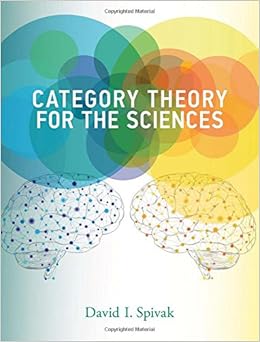
Cover of Complexity Theory for Scientists

I can't wait to delve further in. Spivak's text, though very mathematical in nature seems to have all the basic set theory (at a high school level), and the introduction indicates that he expects readers to have some facility with linear algebra, but there are no other highly daunting prerequisites.

A few excerpts:

This book extols the virtues of a new branch of mathematics, category theory, which was invented for powerful communication of ideas between different fields and subfields within mathematics. By powerful communication of ideas I mean something precise. Different branches of mathematics can be formalized into categories. These categories can then be connected by functors. And the sense in which these functors provide powerful communication of ideas is that facts and theorems proven in one category can be transferred through a connecting functor to yield proofs of analogous theorems in another category. A functor is like a conductor of mathematical truth.

We build scientific understanding by developing models, and category theory is the study of basic conceptual building blocks and how they cleanly fit together to make such models. Certain structures and conceptual frameworks show up again and again in our understanding of reality. No one would dispute that vector spaces are ubiquitous throughout the sciences. But so are hierarchies, symmetries, actions of agents on objects, data models, global behavior emerging as the aggregate of local behavior, self-similarity, and the effect of methodological context.

Hierarchies are partial orders, symmetries are group elements, data models are categories, agent actions are monoid actions, local-to-global principles are sheaves, self-similarity is modeled by operads, context can be modeled by monads.

The paradigm shift brought on by Einstein’s theory of relativity led to a widespread realization that there is no single perspective from which to view the world. There is no background framework that we need to find; there are infinitely many different frameworks and perspectives, and the real power lies in being able to translate between them. It is in this historical context that category theory got its start.

However, in 1957 Alexander Grothendieck used category theory to build new mathematical machinery (new cohomology theories) that granted unprecedented insight into the behavior of algebraic equations. Since that time, categories have been built specifically to zoom in on particular features of mathematical subjects and study them with a level of acuity that is unavailable elsewhere.

Bill Lawvere saw category theory as a new foundation for all mathematical thought. Mathematicians had been searching for foundations in the nineteenth century and were reasonably satisfied with set theory as the foundation. But Lawvere showed that the category of sets is simply one category with certain nice properties, not necessarily the center of the mathematical universe. He explained how whole algebraic theories can be viewed as examples of a single system. He and others went on to show that higherorder logic was beautifully captured in the setting of category theory... 

In 1980, Joachim Lambek showed that the types and programs used in computer science form a specific kind of category. This provided a new semantics for talking about programs, allowing people to investigate how programs combine and compose to create other programs, without caring about the specifics of implementation. Eugenio Moggi brought the category-theoretic notion of monads into computer science to encapsulate ideas that up to that point were considered outside the realm of such theory.

It is difficult to explain the clarity and beauty brought to category theory by people like Daniel Kan and Andr´e Joyal. They have each repeatedly extracted the essence of a whole mathematical subject to reveal and formalize a stunningly simple yet extremely powerful pattern of thinking, revolutionizing how mathematics is done.

All this time, however, category theory was consistently seen by much of the mathematical community as ridiculously abstract. But in the twenty-first century it has finally come to find healthy respect within the larger community of pure mathematics. It is the language of choice for graduate-level algebra and topology courses, and in my opinion will continue to establish itself as the basic framework in which to think about and express mathematical ideas.

As mentioned, category theory has branched out into certain areas of science as well. Baez and Dolan [6] have shown its value in making sense of quantum physics, it is well established in computer science, and it has found proponents in several other fields as well. 

But to my mind, we are at the very beginning of its venture into scientific methodology. Category theory was invented as a bridge, and it will continue to serve in that role.
 

This brings up, not surpisingly, an old trope in mathematics: "what use is abstract mathematics?" Some of the philosophy is disccussed well in Michael Harris's new book Mathematics without Apologies: Portrait of a Problematic Vocation [http://www.amazon.com/gp/product/0691154236/ref=as_li_tl?ie=UTF8&camp=1789&creative=390957&creativeASIN=0691154236&linkCode=as2&tag=math01-20&linkId=OD6GPNGZWT4PJ6XG] which many in the mathematics community have been reading in the past few months.

Often courses like analysis and topology seem awfully abstract, but become much more useful when combined with other topics like linear algebra and group theory to build up other abstract topics like Lie groups and Lie algebras which have more specific problem applications. A few years ago I was shocked to see a Birkhauser/Springer text entitled Stochastic Models, Information Theory, and Lie Groups [http://www.amazon.com/gp/product/081764802X/ref=as_li_tl?ie=UTF8&camp=1789&creative=390957&creativeASIN=081764802X&linkCode=as2&tag=math01-20&linkId=UTUGVB2S56AMUEGH] by Gregory Chirikjian which applies these seemingly disparate areas of mathematics directly to robotics. None of it is possible without analysis as a mathematical base.

I might suggest you sit back and enjoy the abstract portions of the ride for a bit while keeping your eyes out for applied areas for application. You'll find enough applied math as you go along. In general, you may find that many applied areas will become more comprehensible to you because you better understand the abstract math which underpins them.

One bright light at the end of the tunnel for analysis is that it builds up things for measure theory which underpins probability theory.

For resources, you might find Francis Su's (he's the current president of the MAA) online lectures to be interesting/useful. They can be found via http://rudinium.herokuapp.com/#/help or his related blog http://analysisyawp.blogspot.com/p/faq.html.

There are also a wealth of materials via India's IIT http://nptel.ac.in/courses.php?disciplineId=111, which covers many areas of math including analysis. A little bit of searching will also uncover their engineering, physics, and other departments which have applied courses as well.


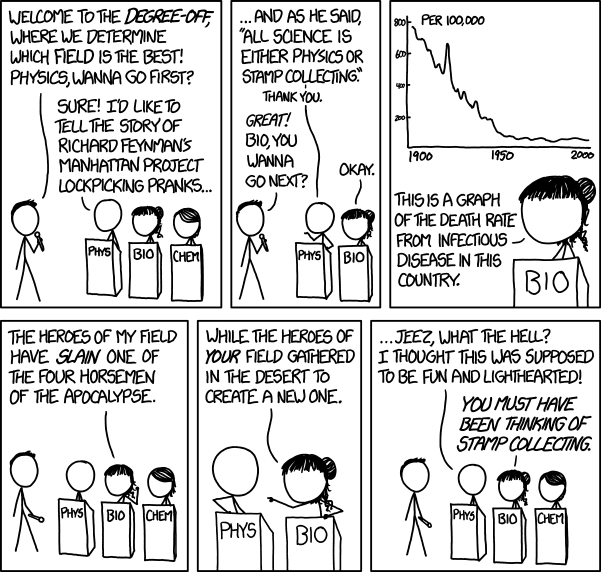
I'M SORRY, FROM YOUR YEARS OF CONDESCENDING TOWARD THE 'SQUISHY SCIENCES', I ASSUMED YOU'D BE A LITTLE HARDER.


First, let's unpack your question a bit. What we're really doing is taking mathematical form, function, and theory and apply it in some sort of unifying manner to unify the areas of information theory and statistical thermodynamics.

You can also ask your question in the reverse direction to apply the mathematics of information to thermodynamics as well as there should be a mathematical duality of sorts, if in fact the two are directly related.

First, let's unpack your question a bit. What we're really doing is taking mathematical form, function, and theory and apply it in some sort of unifying manner to unify the areas of information theory and statistical mechanics and thermodynamics.

You can also ask your question in the reverse direction to apply the mathematics of information to thermodynamics as well as there should be a mathematical duality of sorts, if in fact the two are directly related.

The original link between the two areas stems from a paper by E.T. Jaynes entitled "Information Theory and Statistical Mechanics" (downloadable from http://bayes.wustl.edu/etj/articles/theory.1.pdf). Since then there has been a lot of uninformed back and forth in the literature from agreement to flat out denial, primarily as a result of the multitude of areas from which a researcher can approach the topics and rarely are many/any experts in more than one of these areas. (I specifically recall an article in 2011-2012 in the esteemed journal Science from a senior researcher in information theory that flatly stated there was no link between the two fields!)

Since then, in my opinion, the best source tying the fields together mathematically is A Farewell To Entropy: Statistical Thermodynamics Based on Information by Arieh Ben-Naim [http://www.amazon.com/gp/product/9812707077/ref=as_li_tl?ie=UTF8&camp=1789&creative=390957&creativeASIN=9812707077&linkCode=as2&tag=itbio-20&linkId=WDUVNEIJG5BIO242]. In it he closely and coherently ties the two fields directly together and does a reasonable job of pointing out problems with some of the more popular misconceptions and conflicts in the literature. (For those without the physics, engineering, or math backgrounds in these subjects, I can also highly recommend Arieh Ben-Naim's forthcoming book Information, Entropy, Life and the Universe: What We Know and What We Do Not Know [http://www.amazon.com/gp/product/9814651672/ref=as_li_tl?ie=UTF8&camp=1789&creative=390957&creativeASIN=9814651672&linkCode=as2&tag=itbio-20&linkId=WKTUT4I7WDIYS5MG] which is due out at the end of May.)

As for other connections, I've not seen anything as direct, primarily as there aren't any other major concepts with the exact same name. However, because of the underlying mathematics, I strongly suspect that there are many similar 'concepts'. A few in particular, I have a feeling will come out of the more rigorous mathematical frameworks based on Lieb and Yngvason’s concptualization of thermodynamics (see Resource Convertibility (Part 1)[https://johncarlosbaez.wordpress.com/2015/04/07/resource-convertibility-part-1/] and The Entropy Principle: Thermodynamics for the Unsatisfied: Andre Thess [http://www.amazon.com/gp/product/3642133487/ref=as_li_tl?ie=UTF8&camp=1789&creative=390957&creativeASIN=3642133487&linkCode=as2&tag=itbio-20&linkId=3XLV4PT33UDZ2XLW].) Given the power of the mathematics and the more abstract nature of information theory, I suspect that thermodynamics and statistical mechanics will eventually be viewed as a sub-area or application of information theory.

Another fruitful area of conceptual similarities is slowly grown out of quantum information theory and the statistical mechanics of black holes, though there is some heavily rarified air surrounding these given the required background needed to operate with them both simultaneously.


Some brief thoughts for a scientific link blog for @wbialek
If you're going to invest the time to collect interesting papers for yourself, a group, or even for the broader public, take a few minutes to think about how to not only most easily collect, but to curate them, make them searchable, and thus make them useful in a longer and broader context.

Depending on your needs and interests, I'd recommend building a link blog on a free broad platform like Wordpress that will let you save the title of the article, the URL, a short synopsis, and then tag it with metadata (categories like physics, chemistry, biology, math, etc. or sub-specific tags like information theory, statistical thermodynamics, etc.), and then broadcast it to various social media sites like Twitter, Google+, and others.

Other options with similar functionality to consider are:
WithKnown https://withknown.com/
example: http://stream.boffosocko.com/
Radio3: http://radio3.io/
example:http://radio3.io/users/ChrisAldrich/
Mendeley: https://www.mendeley.com/groups/2545131/itbio-information-theory-microbiology-evolution-and-complexity/

Given the value I think I'd personally get out of you doing something like this, I'm happy to volunteer some time to build, set up, and simplify the process for you. I'm pretty sure that with a minimum of work, you could have a simple bookmarklet on your webbrowser that would easily allow you to "clip" the article you want, add any quick bits of metadata or tags, and then automatically publish it to one or more of your social media sites automatically, keeping the work to doing it well under a minute while allowing you to easily come back and search, sort, and filter later if you choose.


I'll turn this question around to suggest that instead of taking notes from your math/physics textbooks, that you're FAR better off PUTTING notes INTO them! Those margins are meant for writing down the parts of problems and examples that the author implicitly leaves out.

One typically wouldn't take notes from a Spanish, French, or Latin textbook would they? Like most languages, mathematics should be read and written to practice it (and maybe even spoken).

Knowing math or physics is best demonstrated by actually doing problems - and the majority of the time, this is what is going to be on the test too, so just pick up a pencil or pen and start working out the answers.

These subjects aren't like history, philosophy, or psychology with multiple choice or essay type questions that might benefit from note-taking, so just jump right in. Give the book a short read and start plugging away at problems.

If you have problems getting started, take a look at some of the examples provided by the author (or in other books), cover up the answer, and try to recreate the solution.

Drafting off of the Quora question "Why aren't math textbooks more straightforward?" (https://www.quora.com/Why-arent-math-textbooks-more-straightforward) I'd suggest reading some of my extended answer here: http://boffosocko.com/2015/03/16/why-arent-math-textbooks-more-straightforward/


Interestingly, Erwin Schrödinger's seminal paper "What is Life?" came out in 1944, almost contemporaneously with the creation of information theory in 1948. Unbeknownst to most Claude Shannon's (the researcher who created the field of information theory and whose Masters thesis literally launched the digital revolution) Ph.D. thesis (1940) was entitled: "An Algebra for Theoretical Genetics," so he could certainly be said to be the god-father of the entire area.

Since then, certainly dozens of researchers have looked at the potential of using information theory to create a better hard core definition of what life really is (certainly the place where any self-respecting Platonist would begin.)

One of the best definitions and frameworks I've seen thus far has to be that of Christoph Adami. To start, and depending on your level of sophistication, take a look at his recent arXiv paper (Information-theoretic considerations concerning the origin of life - http://arxiv.org/abs/1409.0590) and then take a crack at this popular press article about it in Medium (https://medium.com/the-physics-arxiv-blog/information-theory-and-the-origin-of-life-4cf6b93d156c). If it's something that blows your skirt up, then you can certainly begin to delve more deeply into some of his journal articles over the past decade or so.

For further references, I maintain a nice list of resources at Information Theory and Biology Resources (http://boffosocko.com/itbio/), as well as a "journal club" of sorts at Mendeley: ITBio: Information Theory, Microbiology, Evolution, and Complexity (https://www.mendeley.com/groups/2545131/itbio-information-theory-microbiology-evolution-and-complexity/).

If you really want to blow the top off of your definitions, you might also consider taking a much broader look at the universe (a distant reading, so-to-speak) and read through David Christian's conceptualization (Maps of Time: An Introduction to Big History: David Christian, William H. McNeill http://www.amazon.com/gp/product/0520271440/ref=as_li_tl?ie=UTF8&camp=1789&creative=390957&creativeASIN=0520271440&linkCode=as2&tag=itbio-20&linkId=R3CFNWGXPDTSA5GG) of the relatively new area known as "Big History" (see http://www.bighistoryproject.org) . There, he posits the universe, the stars, and other structures as living things. Admittedly their structures are much simpler than what we might "traditionally" think of as life, but which when considered deeply, certainly are living by the broadest definition - they have less "complexity" but are far longer lived than human beings.